Lure Rod Selection: Rod Action & Power
Choosing the right lure fishing rod requires more than picking a popular model. Two key specifications that often confuse beginners are rod action and rod power — and mixing them up can lead to using a rod that feels wrong for your fishing style or that misses strikes and fish. Understanding the difference between these two will help you select the right rod for the lures you plan to use and the fish you want to catch.
What Rod Action Really Means
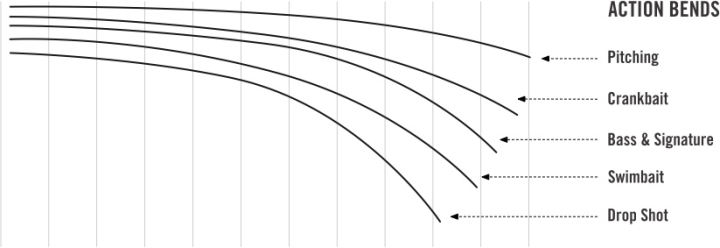
Rod action refers to where and how quickly the rod bends when pressure is applied, especially during a cast or a bite. It does not mean how strong the rod is — that’s a separate specification. A rod that bends near the tip reacts faster, while a rod that bends deeper into the blank reacts slower.
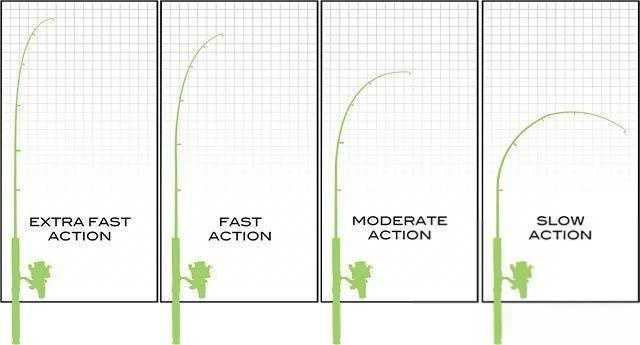
- Extra‑fast action: Bends mostly in the top 15–20% of the rod. This provides very high sensitivity and fast hookset, ideal for techniques where you need to feel and react instantly, such as jigging or fishing soft plastics.
- Fast action: Bends near the upper quarter of the rod. A very versatile action that balances sensitivity, casting control, and forgiving hooksets for many lures.
- Moderate action: Bends deeper into the rod, offering smoother power transfer and longer casts with steady pressure — useful for treble‑hook lures like crankbaits and spinnerbaits.
- Slow action: Bends well down into the blank, creating a “parabolic” feel that is great for delicate presentations and casting very light lures.
Understanding rod action helps you choose how responsive and sensitive your setup will be.
What Rod Power Really Means
Rod power describes how much force it takes to bend the rod blank and how much weight it can handle before flexing under load. Power ratings range from Ultra‑Light (UL) through Light (L), Medium (M), Medium‑Heavy (MH), Heavy (H), and even Extra‑Heavy (XH) for the biggest fish and lures.
- Ultra‑Light & Light: Great for small fish and tiny lures; perfect for finesse presentations.
- Medium & Medium‑Light: Excellent all‑around power for many freshwater lures and species.
- Medium‑Heavy & Heavy: Designed for larger fish, heavy cover, and big lures.
Choosing the right power ensures you can cast the lure weight you intend to use and control fish without overflexing or underloading the rod blank.
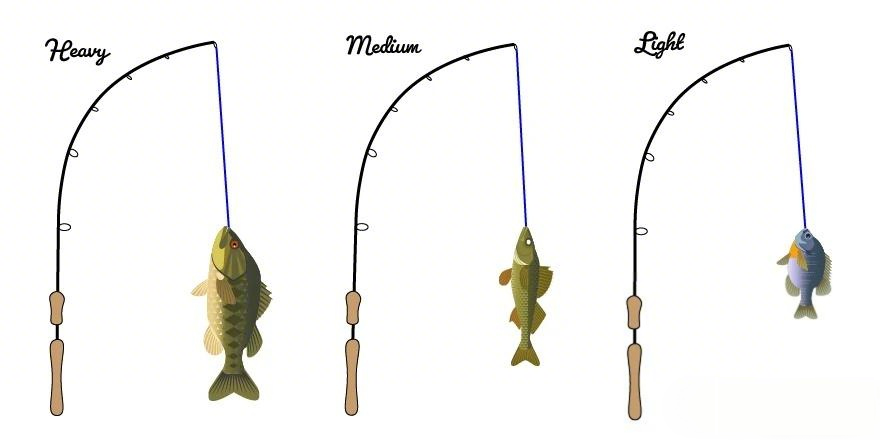
Action vs Power — The Difference Explained
Many beginners confuse action with power, but they serve different purposes:
- Action determines how much and where the rod bends. A fast‑action rod bends near the tip, giving quick energy transfer and sensitivity.
- Power determines how much force is required to bend the rod. A heavy‑power rod can handle heavier lines and larger lures without overflexing.
For example, two rods can have the same action but different power — both may bend similarly in the top third of the blank, but one might require much more force to flex due to a higher power rating.
Knowing both allows you to pick a rod that feels right during casting, detects bites accurately, and performs reliably when fighting fish.
How to Choose For Your Needs
If you’re just starting out and want one rod that handles most situations, a Medium power rod with Fast action (M / Fast) is a great all‑around combination — it balances lure weight range, sensitivity, and hook‑setting ability.
For anglers targeting larger fish or fishing heavy cover, consider pairing a higher power with a fast or extra‑fast action — giving the rod the strength to handle bigger lures and the responsiveness to detect bites and set hooks effectively.
For finesse techniques, lighter power with moderate to slow action helps in casting light lures and absorbing subtle strikes without forcing the hook too aggressively.