Summer Lure Fishing: What the Thermocline Is and How to Find It
When summer’s heat comes, lakes and reservoirs undergo a physical change that every serious lure angler should understand — the thermocline. Knowing what it is and how it affects fish behavior can dramatically improve your summer topwater and deep water fishing success.
What Is a Thermocline?
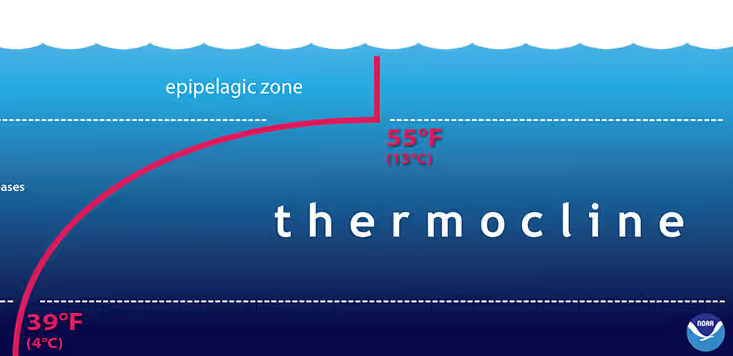
A thermocline is a distinct layer in the water column where the temperature changes rapidly with depth. In warm seasons like late spring and summer, the surface water becomes significantly warmer due to solar heating, while deeper layers remain cool and dense. Between these warm and cool zones, the temperature drops sharply over a relatively narrow depth — that transition zone is the thermocline.
Above the thermocline is the epilimnion, the warmer, oxygen‑rich surface layer. Below it sits the hypolimnion, the cold, dense layer where oxygen levels can be drastically lower.
Why the Thermocline Matters for Summer Lure Fishing
Understanding the thermocline is crucial because fish follow oxygen and comfortable temperatures. Above the thermocline, the water is warmer and well mixed, providing plenty of dissolved oxygen — a preferred environment for most gamefish during the heat of summer. Below the thermocline, the water is cooler but often oxygen‑poor, especially in deeper lakes where decomposition consumes oxygen faster than it can be replenished.
In many lakes, dissolved oxygen drops sharply below the thermocline. This makes the deeper water less hospitable for active fish — especially in summer — effectively creating a sort of “dead zone” where fish rarely linger.
Because of this, most fish — including bass, trout, and other predators — tend to stay at or just above the thermocline, where the water is relatively cool but still rich in oxygen. This zone often becomes a major feeding area, especially during hot afternoons.
How to Find the Thermocline
With a Fishfinder or Sonar
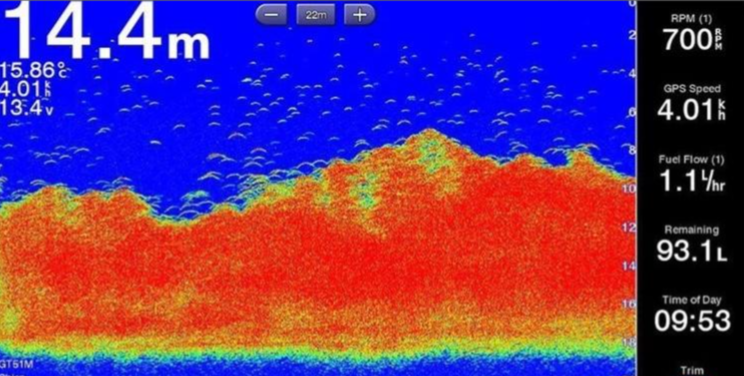
The easiest and most accurate way to locate the thermocline is by using a modern fishfinder or sonar unit. Most sonar displays can show the thermocline as a distinct layer or band of temperature change in the lower part of the water column. Increasing the sensitivity or adjusting gain settings often makes this layer more visible on the screen.
When you see a cluster of fish or a temperature band on your sonar screen, that is usually the thermocline or the zone where fish are holding above it. Targeting that depth with your lure often leads to increased bite rates.
Without Electronics
If you don’t have sonar, there are still ways to estimate the thermocline:
- Observe water clarity: In clear water, thermoclines are typically deeper because light penetrates farther, warming deeper layers. In murky water, thermoclines tend to be shallower.
- Use a temperature gauge: Lower a thermometer on a line and watch for a sharp drop in temperature as you go deeper. That sudden drop usually marks the thermocline depth.
- Use counting methods: Drop a lure and count the seconds to estimate how deep it goes before fish start biting, which often corresponds to the thermocline zone.
How to Fish Around the Thermocline
Once you know where the thermocline is:
Target the water just above it. That’s where fish find the best combination of oxygen and temperature.
Match lure depth to that zone. Use sinking lures or weighted rigs to reach the thermocline.
Look for structure intersecting that depth. Breaks, points, humps, and drop‑offs at thermocline depth often hold fish.
Fishing both above and within the thermocline layer can be productive because baitfish and predators often congregate there.
Final Note: Flowing Water Exceptions
In moving water — such as rivers or streams — a thermocline layer may not form because constant mixing keeps oxygen levels more uniform throughout the water column. But in slower or backwater areas, thermocline effects can still be present.