How to Find Bass: Best Spots, Depth, and Patterns
If you want to know how to find bass, the first thing to understand is that bass are rarely just “out there somewhere.” Most of the time, they are relating to something specific: cover, depth, shade, baitfish, or a route that lets them move between feeding and resting areas. Once you start thinking that way, it becomes much easier to locate bass instead of just casting at random.
That applies whether you are fishing a small farm pond, a natural lake, a big reservoir, or a slow river. Bass behave a little differently depending on the season and conditions, but the basic rule stays the same. They want an easy meal, a comfortable place to sit, and quick access to safety.
So when anglers ask where to find bass, the honest answer is usually this: find the places that combine food, cover, and a good depth change. That is where the better bass fishing spots tend to show up again and again.
Bass Usually Hold Near Something
One of the biggest mistakes beginners make is fishing open, featureless water for too long. Bass do roam at times, especially when chasing bait, but most of the time they relate to some kind of object, edge, or zone.
That might be:
- A weed edge
- A dock
- A laydown tree
- A rocky point
- A drop-off
- A grass line
- A stump flat
- A shaded bank
- A channel swing
- A patch of hard bottom
Bass are ambush fish by nature. They like places where they can sit with an advantage. If you are trying to find bass in a lake, start by asking yourself what gives them a reason to stop there.
A lone dock on an otherwise plain bank can hold fish. A weed line beside deeper water can hold fish. A point with rock and wind on it can hold fish. But a bare stretch of bank with no depth change, no cover, and no bait usually gives you very little to work with.
Start With the Best Bass Fishing Spots
When I get to a new lake, I do not try to fish the whole thing. I look for the highest-percentage water first. Bass can live almost anywhere, but the best bass fishing spots usually make sense on paper before you ever make a cast.
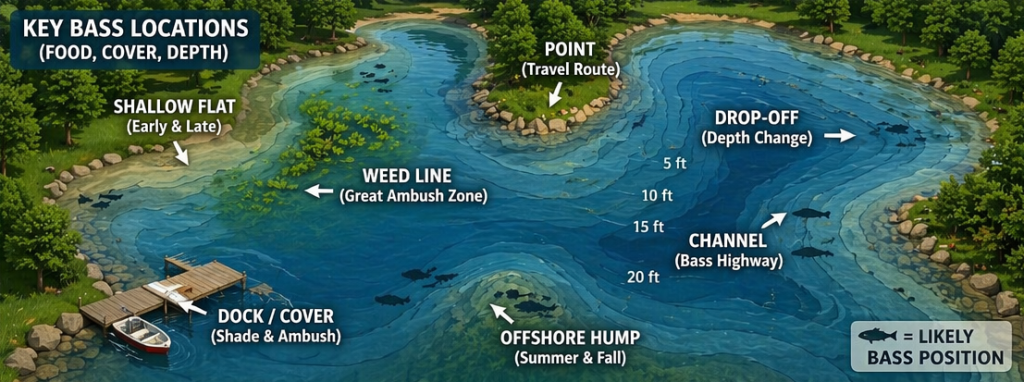
Points and secondary points
Points are always worth a look. Bass use them as travel routes between deeper water and shallower feeding areas. A main-lake point can be good, but secondary points inside a cove or creek arm are often even better, especially in spring and autumn.
Do not just fish the tip. Work the sides too. Bass often sit on the first break, the windblown edge, or the side with better cover.
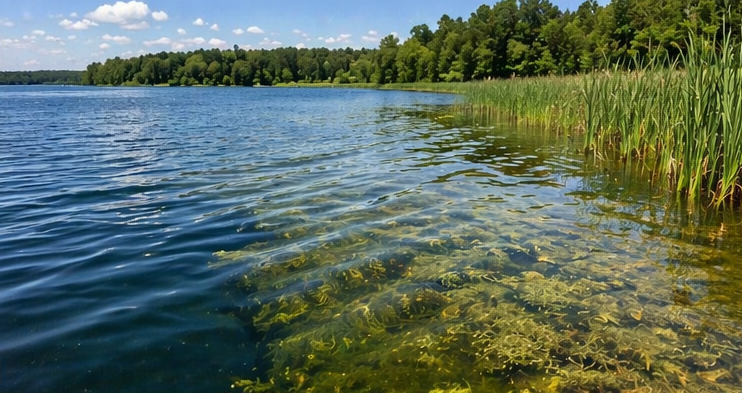
Weed edges and grass lines
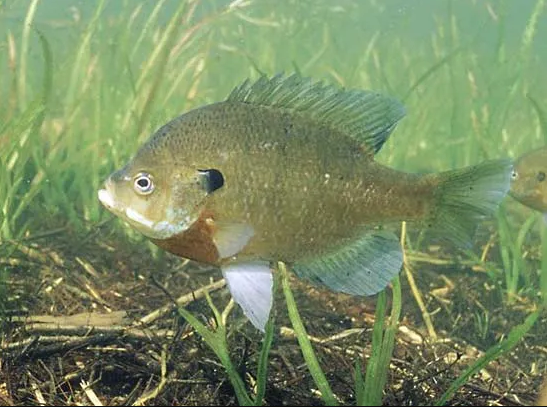
Healthy weeds are bass magnets. They give fish shade, ambush cover, and easy access to bluegill, perch, fry, and other forage. The outside edge is often one of the best places to locate bass, especially when it meets deeper water.
In clear lakes, bass may sit just off the weed line. In stained water, they may bury deeper into the cover. Either way, weeds are rarely a bad place to start.
Docks, timber, and laydowns
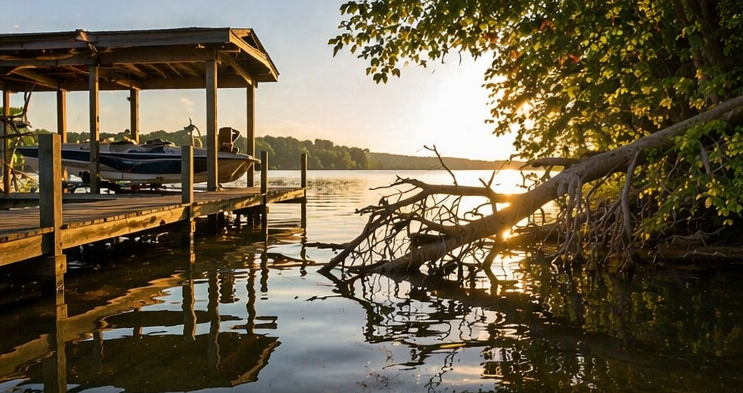
Any cover that creates shade and breaks up the water is worth fishing. Docks hold bass because they offer overhead cover and a ready-made ambush zone. Laydowns and standing timber do the same thing.
One important detail: the best part of a piece of cover is not always the obvious part. A laydown that reaches into deeper water is usually better than one that sits shallow all the way through. A dock near a drop-off is usually better than a dock on a flat with no nearby depth.
Rock and hard-bottom areas
Rock holds heat, crayfish, bait, and bass. On some lakes, rock is the whole game. Riprap banks, chunk rock, gravel transitions, and boulder points all deserve time.
Even in lakes with lots of grass and timber, small hard-bottom spots can be overlooked gems. Bass often set up where rock, sand, mud, and weeds meet.
Bass Fishing Depth Changes More Than People Think
A lot of anglers want one fixed answer on bass fishing depth, but bass do not stay at one depth all day, let alone all season. Depth is always linked to light, season, water clarity, forage, and fishing pressure.
That said, bass usually position where they can move up and down without much effort. That is why depth changes matter so much.
Shallow bass
Bass often move shallow to feed, especially:
- Early in the morning
- Late in the evening
- During overcast weather
- In spring
- Around spawning time
- When bait is pushed into the bank
Shallow fish are often easier to target because they relate to visible cover. But do not assume every shallow-looking bank holds fish. Bass still want a reason to be there.
Mid-depth fish
A lot of bass live in that in-between zone, not super shallow and not truly deep. They hold on the first break, along grass edges, around dock posts, or on a channel edge that gives them quick access both ways.
This is where many good fish come from because it is the balance point between feeding opportunity and security.
Deeper bass
In bright sun, summer heat, winter cold, or high-pressure conditions, bass often slide deeper. That deeper water might not mean offshore in every lake. In a small pond, “deep” may just be the first drop from 4 feet to 8 feet. In a reservoir, it may mean ledges, humps, channels, or points in 15 to 30 feet or more.
The important thing is not the exact number. It is understanding how bass use depth in your water. If you want to find bass in a lake, think more about access to depth than some universal magic depth.
Follow the Bait, and Bass Will Often Be Close
If there is one shortcut in bass fishing, it is this: find the food first.
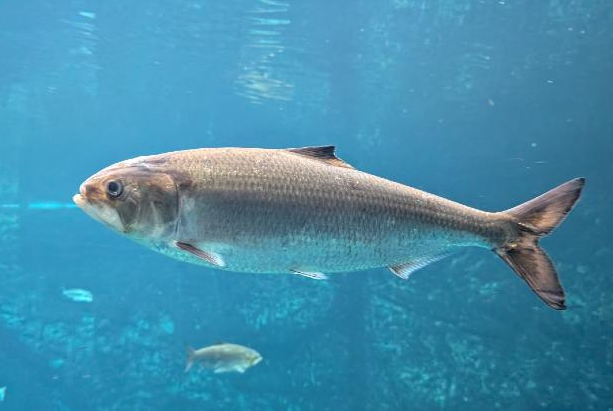
Bass may relate to cover, but they stay in an area because there is something to eat. Bluegill, perch, fry, shad, minnows, and crayfish all shape where bass position.
If you see bait flickering on the surface, bluegill around docks, or birds working a bank, pay attention. If your electronics show bait over a point or along a break line, pay attention. Bass do not have to be on top of the bait every second, but they are rarely far from the groceries.
A good example is a windblown bank in summer. The calm side of the lake may look easier to fish, but the windy side may push plankton and bait into one shoreline. Bass often follow that food, especially if the bank also has rock, grass, or wood.
Season Changes Everything
If you really want to get better at how to find bass, start thinking seasonally.
Spring
Spring is one of the easiest times to get on bass because they move shallow and become more predictable. Look for protected coves, darker-bottom areas, secondary points, and banks that warm early.
Pre-spawn bass often stop on points, channel swings, and staging areas before moving into shallower spawning zones. Post-spawn fish may linger near fry, cover, or nearby breaks.
Summer
Summer bass can be spread out, but they still follow patterns. Early and late in the day, they often feed shallow. As the sun gets high, many pull deeper, tighter to cover, or into thicker vegetation.
In summer, some of the best answers to where to find bass are:
- Deep weed edges
- Docks with shade
- Offshore humps
- Creek channels
- Ledges
- Windblown points
- Timber near deeper water
Autumn
Autumn bass often feed hard as baitfish group up. This is a great time to fish points, flats near deep water, creek mouths, and transition banks. Bass may roam more, but they still use structure to pin bait and set up feeding lanes.
Winter
Winter bass usually slow down and hold in more stable water. Look for deeper breaks, channels, bluff banks, and areas with bait nearby. They may still feed shallow during warming spells, but most winter fishing rewards a slower, more precise approach.
How Light, Wind, and Water Clarity Change Bass Position
These three factors matter more than many people realize.
Light pushes bass around. On cloudy days, they often roam more and feed longer. On bright days, they tend to hold tighter to cover, shade, or deeper edges.
Wind is usually a good thing unless it makes a spot unfishable. It pushes food, breaks up light penetration, and gives bass confidence. A slightly windy point or bank is often better than a dead-flat one.
Water clarity changes how bass use cover and depth. In clear water, bass may sit deeper or farther off the cover. In dirty water, they often hold shallower and tighter to targets.
This is why the same dock, weed line, or point can fish differently from one day to the next.
Bank Fishing, Boat Fishing, and Kayak Fishing for Bass
Bank fishing
Bank anglers should focus on water with built-in options. Look for corners, points, inflows, docks, weed edges, and steep banks that give access to more than one depth zone.
One of the smartest things a bank angler can do is avoid wasting time on long, empty shorelines.
Boat fishing
A boat opens up offshore structure, better casting angles, and the ability to follow bass as they shift. That is a major advantage, especially in summer and winter. Still, the same rule applies: do not just move around a lot. Move with purpose and fish the best-looking water thoroughly.
Kayak fishing
Kayaks are brilliant for bass because they let you fish quietly and get close to cover without much noise. They are especially good for working docks, shallow grass, timber, and smaller lakes. Just be careful not to rush. Bass fishing from a kayak rewards a slow, methodical approach.
Common Mistakes When Trying to Find Bass
One common mistake is fishing only what looks nice to the angler, not what makes sense for the fish. A clean open bank may be easy to cast, but it is often low percentage.
Another is ignoring depth change. Even small drops matter. Bass like places where they can slide from shallow to deep without traveling far.
A third mistake is failing to adjust when conditions change. If the sky brightens, the wind picks up, or the water muddies, bass will often reposition.
And finally, many anglers leave fish too early or stay too long in dead water. The balance comes from learning to recognize whether a spot has the right ingredients: cover, bait, depth, and a reason for bass to be there.
Final Tips for Finding More Bass
If you want to improve at how to find bass, keep your approach simple.
Start with the highest-percentage water. Look for cover, nearby depth, and some sign of food. Fish those places first before you ever start wondering about obscure patterns.
Pay attention to the season, then fine-tune based on light, wind, and clarity. Notice what kind of spot gets bit: a weed edge, shady dock, rocky point, shallow flat, or channel swing. Then look for more places like it.
That is how good bass anglers do it. They do not just chase random fish. They build a pattern.
Once you get used to thinking in terms of routes, edges, and feeding zones, it becomes much easier to locate bass, understand bass fishing depth, and consistently find bass in a lake instead of hoping one swims by.
wish you all the best