How to Find Fish in a River: Best Spots and Water Reading Tips
If you want to learn how to find fish in a river, the quickest answer is this: stop looking at the river as one long stretch of water and start looking for the places that give fish a break. In flowing water, fish are always balancing three things — food, current, and safety. The best river fishing spots are usually the places where those three meet.
That might be a seam behind a rock, a crease below a bridge, a deeper bend, a slack pocket beside fast water, or a shady undercut bank where fish can hold without burning energy. Once you understand that, it gets much easier to find fish in a river instead of just covering water and hoping for the best.
Whether you fish small streams, medium rivers, big European canals with flow, or broad US river systems, the basic rule stays the same: fish rarely sit in the hardest current unless they are actively feeding. Most of the time, they position where they can rest cheaply and slide a short distance into moving water to intercept food. That is the heart of read water for fishing.
Start by Reading the Current
On a lake, fish relate heavily to structure and depth. In a river, they still do that, but current becomes the main driver. The current moves food, shapes the bottom, creates shelter, and decides where fish can hold comfortably.
When I reach a new river, I look for five things straight away:
- Current speed
- Depth changes
- Current breaks
- Cover
- Feeding lanes
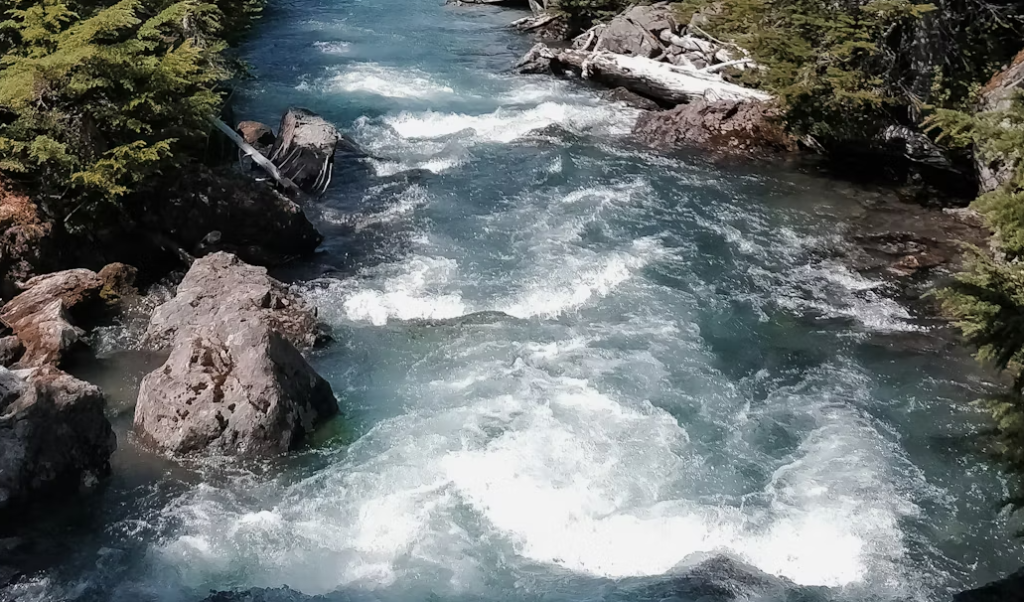
These tell you more than the surface appearance alone. A river may look beautiful from the bank, but if the flow is too flat and featureless, there may be very few fish using that stretch. On the other hand, an untidy patch of broken water with seams, rocks, and a darker run often holds life.
The key is to spot where fast water meets slower water. That edge is often a feeding lane. Fish can sit just out of the heavy push and pick off food drifting by. If you want to know where to find fish in a river, start there.
The Best River Fishing Spots Usually Have Soft Water Nearby
One of the biggest mistakes beginners make is casting straight into the fastest water they can see. It feels logical because fast current looks lively. But fish are not trying to get battered all day. They want a place where they can hold with minimal effort and still stay close to food.
That is why so many good river fishing spots include a patch of softer water beside stronger flow.
Eddies and slack pockets
An eddy forms where current curls behind an obstacle or bank feature. It creates a calmer pocket where fish can rest while food spins or drifts nearby. Trout, chub, perch, bass, smallmouth, grayling, and many other river fish use these spots.
Small eddies often look too obvious, so they get fished hard, but they are obvious for a reason. Fish use them.
Seams
A seam is the visible or invisible line where two different current speeds meet. These are classic feeding lanes. Fish sit just inside the slower side and watch the faster water deliver food.
If you are trying to find fish in a river, seams should become second nature to you. They may form beside a gravel bar, along a crease below a rapid, or where flow splits around a mid-river obstruction.
Current breaks
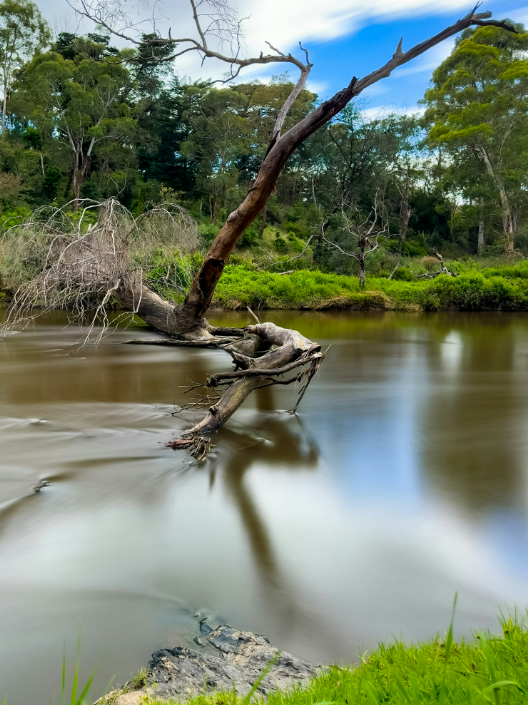
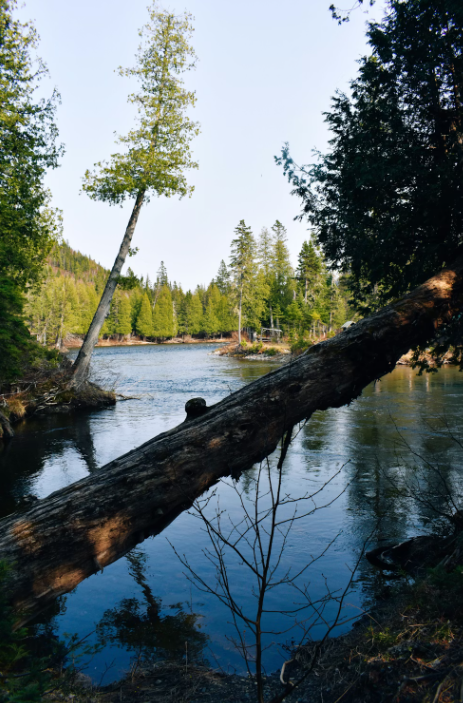
Current breaks fishing is one of the most useful river skills you can learn. A current break can be anything that interrupts the flow — a boulder, a fallen tree, bridge support, weed bed, moored boat, or even a subtle change in bank shape.
Fish often sit just behind or just off the side of that object, where the pressure drops. From there they can dart out, grab food, and slide back into comfort.
Deeper bends and outside curves
River bends are always worth studying. The outside bend often carries more force and cuts a deeper channel. That deeper water can hold fish, especially in clear conditions, bright light, or lower flows.
The inside bend is often shallower and slower, sometimes with a gravel bar or softer shelf. Depending on season and species, fish may move between the two.
Learn to Spot Feeding Lanes and Holding Water
A lot of anglers mix up holding water and feeding water. They are connected, but not always exactly the same.
Holding water is where fish can sit comfortably.
Feeding water is where food comes to them.
The best places are where those two zones are close together.
A fish might hold behind a rock in slower water, but its feeding window is the narrow seam a foot or two away. A pike or bass may sit near slack water beside a fast run, waiting for prey to sweep past. A trout may hold near the bottom in a crease below broken water and slide upward as insects drift over.
This is why learning to read water for fishing matters so much. You are not just casting at “a nice spot.” You are trying to understand how fish use the river minute by minute.
A good way to think about it is this: if you were a fish, where could you rest without fighting the current, and where would the food come from?
Look for Cover That Changes the Flow
Cover matters in rivers for the same reason it matters in lakes, but here it does even more work because it also changes the current.
The best river cover often includes:
- Overhanging trees
- Undercut banks
- Fallen timber
- Rocks and boulders
- Bridge pilings
- Weed beds
- Reed edges in slower rivers
All of these create shade, shelter, and broken flow. A fallen tree is not just cover. It creates multiple current lines, slack pockets, shadow, and ambush points. A bridge support is not just a hard object. It splits the river, forms seams, and often scours deeper water around it.
That is why fish tend to stack around useful cover, especially in rivers with otherwise plain banks.
River Fish Change Position With Water Level and Season
One stretch of river can fish completely differently depending on season, rainfall, and temperature. That is why a spot that produced last month might feel lifeless today.
Low, clear water
In low, clear conditions, fish are usually more cautious. They often hold deeper, closer to cover, tighter to undercut banks, beneath shade, or in quieter water where they feel secure.
This is when stealth matters. Light lines, careful wading, quieter approaches, and longer casts usually help.
Higher or coloured water
When the river rises or colours up, fish often move out of the hardest main flow and into slower margins, inside bends, flooded edges, slacker pockets, and sheltered areas behind objects.
This is one of the best times to find fish in a river if you stop fishing where the river used to be and start fishing where the fish have moved.
A classic example is after rain. Many anglers keep casting into the central push, but fish may now be tucked into softer water near the bank, behind bushes, or in quiet back-eddies where they can feed without getting pushed around.
Seasonal shifts
In spring, fish often spread out and become more active as water warms. In summer, early and late light can be best, especially in clear rivers. In autumn, fish often feed harder and hold in reliable runs, bends, and transition areas. In winter, slower, deeper water becomes more important, and fish often hold in tighter groups.
The river is always changing. Good anglers change with it.
Bank Fishing, Wading, and Small Craft Approaches
You do not need a boat to get good at river fishing. In fact, a lot of the best river anglers learn by walking banks and reading water at close range.
Bank fishing
For bank anglers, the biggest edge comes from mobility. Do not marry one swim too early unless you know fish are there. Work likely spots: bends, crease lines, overhangs, bridge areas, slack margins, and deeper runs.
If a stretch looks uniform and featureless, keep moving.
Wading
Wading gives you better angles and lets you cover seams properly, but it also teaches you how the current really feels. Once you start wading rivers, you quickly learn where fish can and cannot hold comfortably.
Just be careful not to wade straight into the water you should be fishing. A lot of anglers step through the soft edge where fish were sitting before they even make a cast.
Kayaks and small boats
On wider rivers, a kayak or small boat helps you access mid-river structure, side channels, and less pressured banks. The same logic applies, though: fish the current breaks, depth shifts, cover, and softer holding water, not just the obvious main channel.
Common Mistakes When Trying to Find Fish in a River
The first mistake is ignoring current and focusing only on depth. Depth matters, but in rivers, current often matters more.
The second is fishing too much fast water. Most fish want to be near fast water, not buried in the strongest flow all day.
The third is standing in the wrong place. Many anglers walk straight up to the perfect seam or margin and spook the fish before they start.
Another mistake is failing to adjust to changing river levels. A rising, coloured river is a different fishery from a low, clear one. Fish reposition fast.
And finally, many people cast too broadly instead of targeting small, high-percentage areas. Rivers are full of tiny details — a crease, a pocket, a dark slot, a sheltered edge. Often that little detail is the whole key.
A Simple Way to Break Down Any River
If you are unsure how to approach a new river, keep it simple. Ask yourself:
- Where is the main current?
- Where is the nearest softer water?
- Where is the food likely to drift?
- What cover changes the flow?
- Which areas give fish both safety and a feeding chance?
That short checklist helps you read water for fishing without overthinking it. Over time, you start seeing the river in layers rather than as one moving surface.
Final Tips for Finding More Fish in a River
The best tip I can give on how to find fish in a river is to slow down and study the water before you cast. Rivers give away a lot if you watch them properly.
Look for the crease, not just the run. Look for the pocket behind the rock, not just the rock. Look for the softer edge beside the fast water, not the fastest water itself.
If you keep that in mind, your river fishing improves quickly. You start recognizing the kinds of places fish use again and again, no matter the country, species, or river size.
That is when things click. You stop casting at random bits of water and start placing your bait or lure where a fish actually wants to be. And once you reach that point, it becomes much easier to find fish in a river with confidence.