Summer Bass Fishing Guide – Hot Weather Tactics & Tips
Summer can be one of the most challenging seasons to hook bass — but it’s also one of the most rewarding if you understand how the fish behave in the heat. Once the sun gets high and the water warms up, bass change their game plan, and so should you. Stick with me and I’ll walk you through the rhythms of summer bass action — from sunrise topwater blitzes to slow midday deep‑water ambushes.
How the Summer Sun Changes Bass Behavior
When early summer days heat up, bass start thinking differently. Instead of cruising shallow flats like they might in spring, they begin to seek cooler, deeper water or shaded cover to escape the relentless sun. On hot afternoons, you’ll find them tucked into places where the water is cooler and oxygen levels stay comfortable — deep bends, humps, shaded docks, and ledges.
But here’s the exciting part: bass aren’t done feeding. They’re still actively hunting — they’re just picking times and places where the conditions suit them best. That’s where timing and location become your best friends.
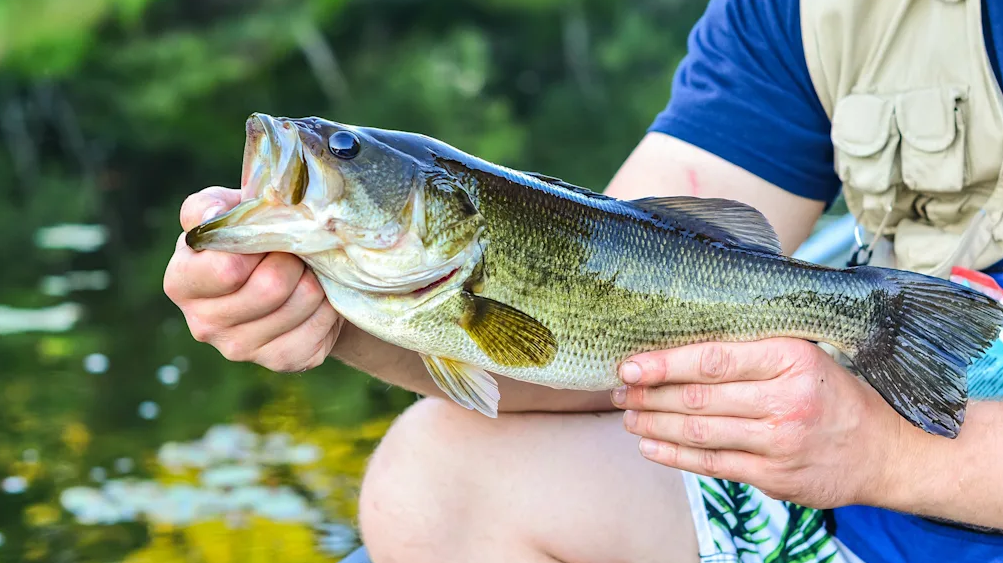
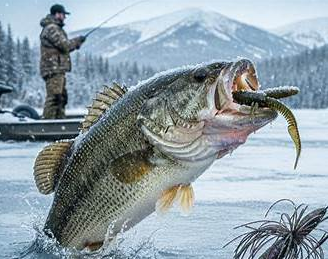
Use: Sets the tone for the article and draws readers in visually
Prime Times of the Day to Fish
One thing I’ve learned after countless summer dawns and dusks is that timing can make or break your day on the water:
Early Morning & Late Evening – The Best Windows
In the cooler low light of dawn and dusk, bass move up from deeper water to shallow edges and ambush points — often with ferocious topwater strikes. These are your go‑to times for aggressive surface action.
Midday Heat – Time to Think Deep
When the sun’s at its peak and surface water feels like bathwater, bass usually retreat deeper. That doesn’t mean you can’t catch them — you just have to change your tactics. Midday is prime structure time, and slowing down becomes key.
Nighttime & Overcast Days
On some lakes, summer night fishing is underrated — bass continue feeding in the cooler dark hours, and shadowy conditions can trigger bites even when daytime has been slow.
Where to Find Summer Bass
As the day goes on, bass tend to switch spots based on water temperature, oxygen, and food availability. Here’s where to look:
Deep Structures: Humps, Drop‑offs, Ledges
Deep water is often a refuge in higher temps — these underwater features hold cooler water and food. Use your fish finder to mark these spots; they’re gold mines during midday.
Shaded Cover: Docks & Overhangs
Shade isn’t just comfort for bass — it’s ambush territory. Overhanging trees, docks, pilings, or brush piles offer shade, cooler water, and prey activity, making them consistent targets all day long.
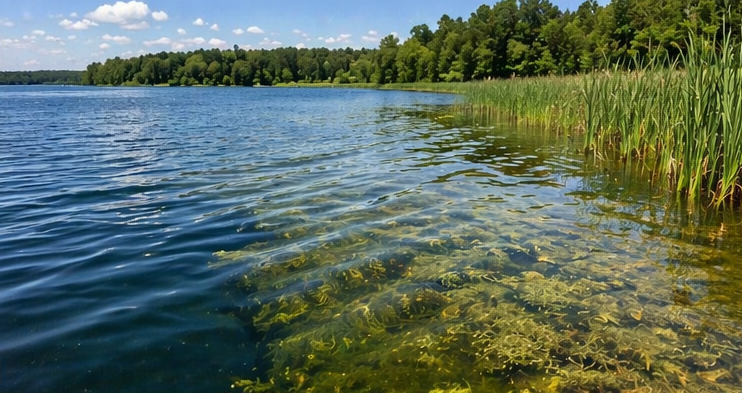
Vegetation Edges & Grass Beds
Bass love these areas because baitfish like them — and summer bass will lie just beneath the cover, ready to pounce.
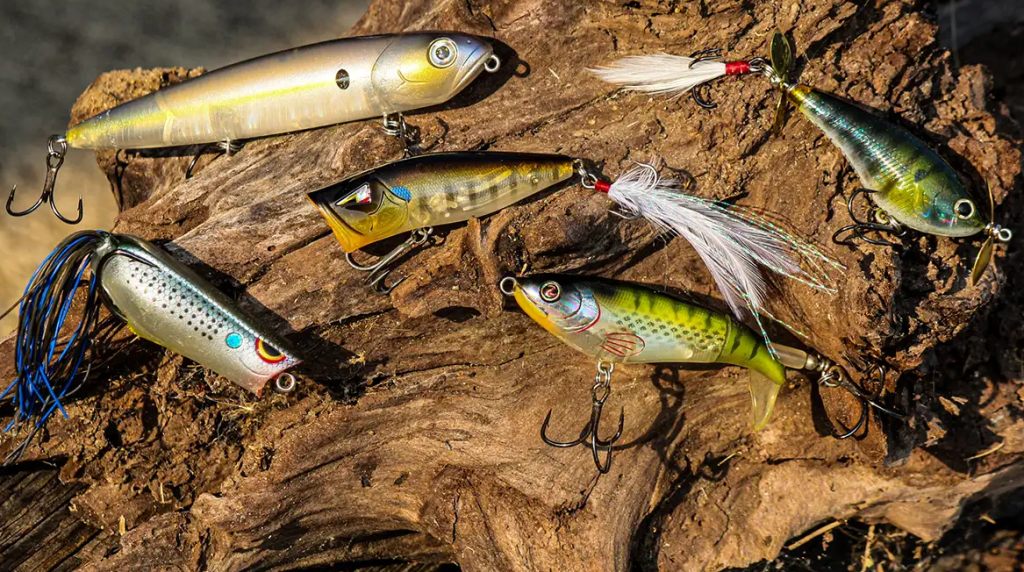
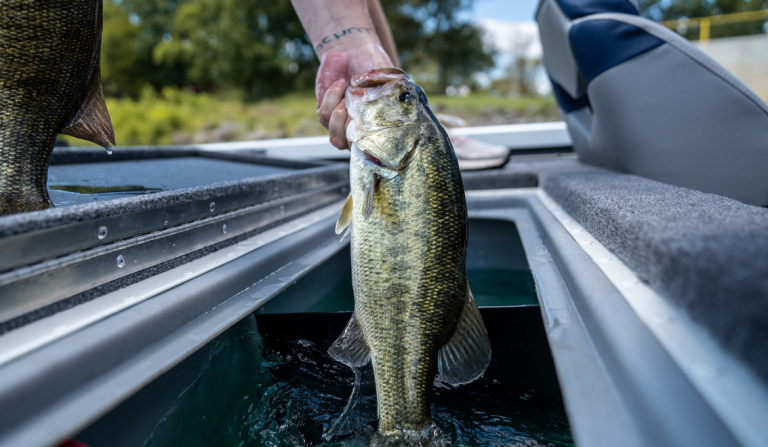
Use: Illustrates the gear recommendations and gives visual context to lure options
Summer Lure & Presentation Strategies
Your lure choices in summer can make a huge difference — especially when matched to where the bass are holding and what they’re willing to chase.
Topwater Lures – Dawn & Dusk Specials
When the sun is low and water is calm, topwater baits like poppers, frogs, and walking plugs can trigger explosive surface strikes. A slow “walk‑the‑dog” or pause‑pop‑pop retrieve often spells action.
Deep Crankbaits & Carolina Rigs – Midday Producers
Once bass head deep, you need lures that go with them. Deep‑diving crankbaits reach those cooler layers and tempt reaction strikes, while Carolina rigs let soft plastics sit right in the bite zone down by structure.
Drop Shot Rigs – Precision in the Heat
One of my personal favorites on hot afternoons, the drop shot keeps your bait suspended at just the depth where fish are holding — especially around offshore humps or points. It’s finesse that actually works when bass are feeling lethargic.
Soft Plastics & Jigs – Versatile Options
Soft worms on a Texas rig, creature baits on a jig, or even wacky rigs are perfect for probing shady cover or deep edges where bass lurk. Slow and subtle often equals more bites when the sun is high.
Tackle, Timing & Practical Considerations
Here’s where the fun meets the nitty‑gritty:
Match Your Gear to the Task
- For shallow topwater, lighter rods with fast action help you feel every strike.
- For deep rigs like Carolina or drop shot, stiffer setups let you feel bottom and structure.
- Braided line often helps with heavy cover; fluorocarbon is great for finesse presentations near structure.
Adjust As the Day Changes
Start shallow at dawn with noise makers and surface baits. When the sun rises, shift deeper and slow your presentation. In the evening, transition back to shallow with quiet, enticing lures.
Watch Weather & Wind
Overcast days, storms, or even a light breeze can flip summer patterns upside down — and in a good way. Cloud cover often brings bass into shallows mid‑day, while scattered wind can make shaded edges even more productive.
A Real Summer Memory
One July afternoon on Lake X stands out. It was brutally hot — the kind of day that drags your energy down before you even hit the water. I started before sunrise with a topwater buzzbait, scoring a couple of fierce early strikes as bass fed shallow in the cool light. By mid‑morning, the surface went quiet, so I switched to a deep crankbait, targeting an offshore hump I’d marked on my electronics. Sure enough, just as the sun crossed overhead, bass erupted on the lure down near 18 feet, giving me one of the best fights of that season.
As the sun dipped low again, I switched back to a walking bait and hammered another string of fish along the shaded bank. That day taught me timing is just as important as technique when it comes to summer bass.
Final Cast: Stay Patient & Adapt
Summer bass fishing isn’t always easy — but that’s what makes it so satisfying. Once you learn to read water, adjust with the sun, and match your presentations to bass behavior, you’ll find consistent action even in the heat. Whether that’s an explosive topwater strike at dawn or a deep drop‑shot bite at high noon, summer bass are there — you just need to know where to look and how to tempt them.
Tight lines and cool water, my friend!