How to Read Water for Fishing: Find More Fish in Moving Water
If you want to get better at river fishing, stream fishing, or any kind of moving-water angling, learning how to read water for fishing is one of the biggest steps you can take. It is the skill that helps you stop guessing and start fishing the spots that actually hold fish.
The basic idea is simple. In moving water, fish are always looking for the same things: food, shelter from current, and a safe place to hold. Once you start spotting those features on the surface and connecting them to what is happening underneath, it becomes much easier to find fish in moving water.
That is true whether you are fishing a small trout stream, a medium river for chub or perch, or a larger system for bass, pike, barbel, grayling, or walleye. The species change, but the water tells the same story. Good anglers learn to see fish holding water, feeding lanes, and current breaks before they ever make a cast.
What the Water Is Really Telling You
When anglers talk about reading water, they are really talking about understanding how flow shapes fish behavior.
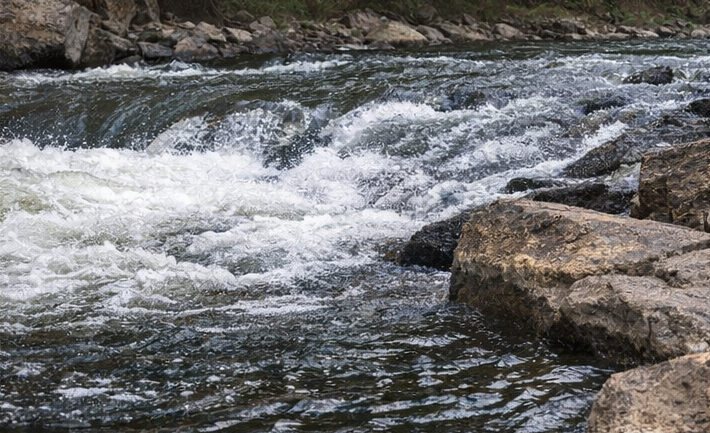
Moving water is never uniform. Some parts push hard, some parts glide, some parts curl back, and some parts barely move at all. Fish use those differences constantly. They rarely sit in the hardest current for long unless food is pouring through and the effort is worth it. Most of the time, they hold where they can conserve energy and move only a short distance to feed.
That is why how to read water for fishing comes down to spotting contrasts:
- Fast water next to slower water
- Deep water next to shallow water
- Broken current next to calm pockets
- Cover next to feeding lanes
- Shade next to open flow
When you start seeing those contrasts, rivers stop looking like one long strip of water. They start breaking into small, fishable sections.
Start With the Current, Not the Bank
One of the most common beginner mistakes is focusing too much on the bank and not enough on the current itself. The bank matters, of course, especially if there are roots, trees, reeds, rocks, or undercuts. But in moving water, the current usually decides where fish can and cannot sit comfortably.
When I walk up to a new stretch, I do not rush straight into casting. I watch the surface for a minute and ask myself a few basic questions:
- Where is the strongest flow?
- Where does that flow slow down?
- Where is food likely to drift?
- Where could a fish hold without burning too much energy?
- Is there cover nearby?
That short pause saves a lot of wasted casts.
Look for seams first
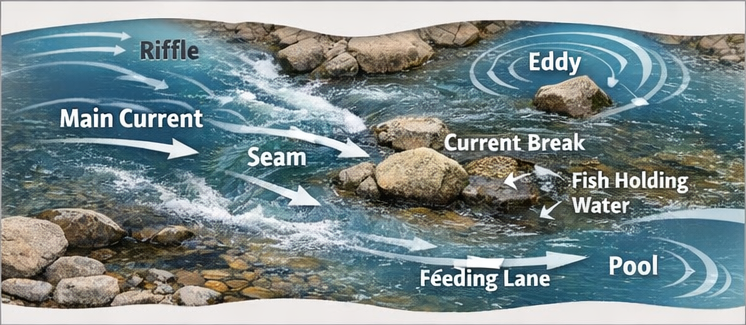
If you only learn one thing about read water for fishing, learn to spot a seam. A seam is where two current speeds meet. It might be obvious, like a sharp line between choppy water and a smooth glide, or it might be subtle, just a slight crease on the surface.
Seams matter because they are classic feeding lanes. Food gets pushed along by the faster flow, while fish can sit just inside the softer edge and dart out when something worth eating comes past. A lot of river seams fishing comes down to covering that line properly from different angles.
Watch for current breaks
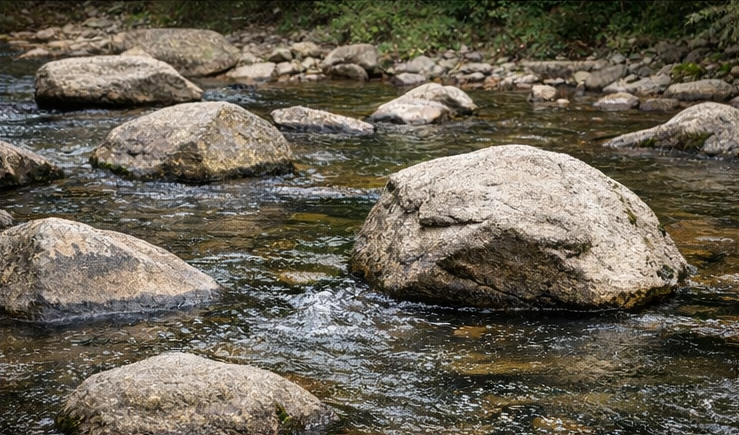
Current breaks fishing is another core skill. A current break is anything that interrupts flow and creates softer water nearby. Big rocks, bridge pilings, fallen trees, weed beds, bends, islands, and even small changes in the bank can all create current breaks.
Fish love them because they can hold just out of the push while still staying close to food. A trout behind a rock, a bass beside a dock piling in current, or a chub tucked near an overhang are all doing the same thing: resting efficiently while the river brings food to them.
The Best Fish Holding Water Often Looks Smaller Than You Think
One thing that surprises newer anglers is how small a productive spot can be. A fish does not need a huge area. It might only need a soft pocket the size of a bucket, as long as that pocket sits next to a feeding lane.
That is why fish holding water often comes down to small details:
- The slack pocket behind a single boulder
- A darker slot beside a gravel bar
- A slight crease below a riffle
- The calm edge beside a fallen branch
- A shaded undercut bank with slower flow beneath it
A lot of people cast across the whole run and miss the best part by a few feet. Good water reading tightens your focus.
Broken water and riffles
Broken water can be excellent because it adds oxygen, masks your presence, and often washes food downstream. Fish may hold just below a riffle, in the crease beside it, or in the deeper run that follows.
This is especially true for trout, grayling, and other species that like well-oxygenated flow. But the same principle applies elsewhere too. Fish often sit where broken water spills into more manageable current.
Pools and glides
Pools are the obvious places that attract attention, and for good reason. Deeper water often gives fish security. But do not just fish the middle because it looks deep. Look at the head of the pool where current enters, the tail where it narrows and accelerates, and any seam or structure inside it.
A smooth glide can also hold fish if it has depth, cover, or a defined feeding lane. Not every productive spot looks dramatic.
Cover Changes Everything in Moving Water
Cover is important everywhere, but in rivers and streams it becomes even more valuable because it changes both the physical layout and the current flow.
Good cover in moving water includes:
- Rocks and boulders
- Fallen trees
- Undercut banks
- Bridge supports
- Overhanging bushes
- Weed beds
- Root systems
These features do more than hide fish. They create shade, soften flow, and break up the current into small holding zones. A big rock does not just sit in the river. It creates an upstream cushion, a side seam, and a softer pocket behind it. A fallen tree can create several different holding spots in one place.
If you are trying to find fish in moving water, do not just look for flow. Look for flow that has been interrupted in a useful way.
Depth, Light, and Water Clarity Still Matter
Current is the main story, but it is not the only story.
Depth still matters. Fish may sit shallower in low light or coloured water, and deeper in bright, clear conditions. In summer, early and late periods often pull fish into shallower feeding zones. In winter, slower and deeper water usually becomes more important.
Light also changes positioning. On bright days, fish often hold tighter to shade, undercuts, or deeper slots. On dull or overcast days, they may spread a little more into open feeding lanes.
Water clarity affects confidence. In low, clear water, fish can be spooky, especially in smaller rivers. They often sit tighter to cover and react badly to noisy wading or bad casting angles. In stained water, they may feel safer and move into areas they would avoid in bright, clear conditions.
This is why the best anglers do not just memorize spots. They read the same stretch differently depending on the day.
How to Break Down a New Stretch of River
When you fish unfamiliar water, keep the process simple. You do not need to solve the whole river at once.
I usually break a stretch down in this order:
1. Find the main current line
That tells you where food is moving.
2. Find the softer edges beside it
That tells you where fish can sit cheaply.
3. Look for depth changes
That tells you where fish can feel secure.
4. Add cover into the picture
That shows you the highest-percentage holding zones.
5. Fish the obvious feeding lanes first
Start with the seam, the current break, the tail of the run, or the pocket behind structure.
This approach works whether you are on foot, in a kayak, or in a small boat. Bank anglers use it to pick their casts. Wading anglers use it to choose their angle and avoid spooking fish. Kayak anglers use it to slow down and fish likely spots instead of just drifting through them.
Common Water-Reading Mistakes
A lot of missed opportunities come from a few repeat mistakes.
The first is fishing only the obvious fast water. Fast water looks exciting, but fish usually want to be beside it, not pinned in the strongest part of it all day.
The second is ignoring the small stuff. A tiny crease, a narrow seam, or a small shadow line can hold fish just as well as a big dramatic run.
The third is confusing holding water with feeding water. Fish may sit in the softer pocket and feed in the edge just beside it. If you only cast into one and not the other, you can miss them.
Another big mistake is approaching the water badly. In clear rivers, you can ruin a good spot before the first cast by standing too high on the bank, walking into the margin, or splashing through the tail of a run.
And lastly, many anglers move on too quickly from a good area or stay too long in a bad one. Reading water helps you make that decision with more confidence.
Real-World Examples of Productive Water
A few simple examples make this easier.
On a small river, a fallen tree creates a slack pocket behind it and a crease down its side. That is a perfect place to start. Cast along the seam first, then into the softer pocket.
On a medium river, a bend pushes the main flow into the outside bank and leaves a steadier glide on the inside. Fish may hold in the deeper outside line during bright conditions and slide into the steadier water to feed when light drops.
On a rocky run, a cluster of boulders creates several small breaks. One fish may sit behind the largest rock, another beside a crease between two stones, and another at the tail where the current evens out again.
That is the real value of knowing how to read water for fishing. You stop seeing random river features and start seeing jobs each piece of water is doing.
Final Tips for Reading Water Better
The easiest way to improve is to slow down and watch more. A lot more.
Before you cast, ask yourself where the easiest meal would drift and where a fish could wait without fighting the flow. That simple habit will put you around more fish.
Try not to think in huge areas. Think in edges, seams, pockets, slots, and current breaks. Fish in moving water are often using very precise holding positions.
And remember this: if a spot gives a fish shelter, nearby food, and a sense of security, it is worth fishing properly.
Once you learn to spot those little combinations, you get much better at read water for fishing, and the whole river starts making sense. That is when you begin to find fish in moving water consistently instead of just covering ground.